
Meter and pressure tests
With every tap and appliance off, a water meter that still turns points to a leak somewhere. A pressure test then narrows down which line is losing water.
We find leaks that are hidden in walls, ceilings, floors and the lines that run to the house, and then repair them. Call about a stain, a damp floor or a water meter that keeps turning.
A leak visit starts with finding the source, and the repair follows once you have heard what the plumber found.
With every tap and appliance off, a water meter that still turns points to a leak somewhere. A pressure test then narrows down which line is losing water.
A stain or a soft patch on a wall or ceiling marks where water has reached, which can be a different spot from where the pipe is leaking. The plumber traces the water back to its source before opening anything.
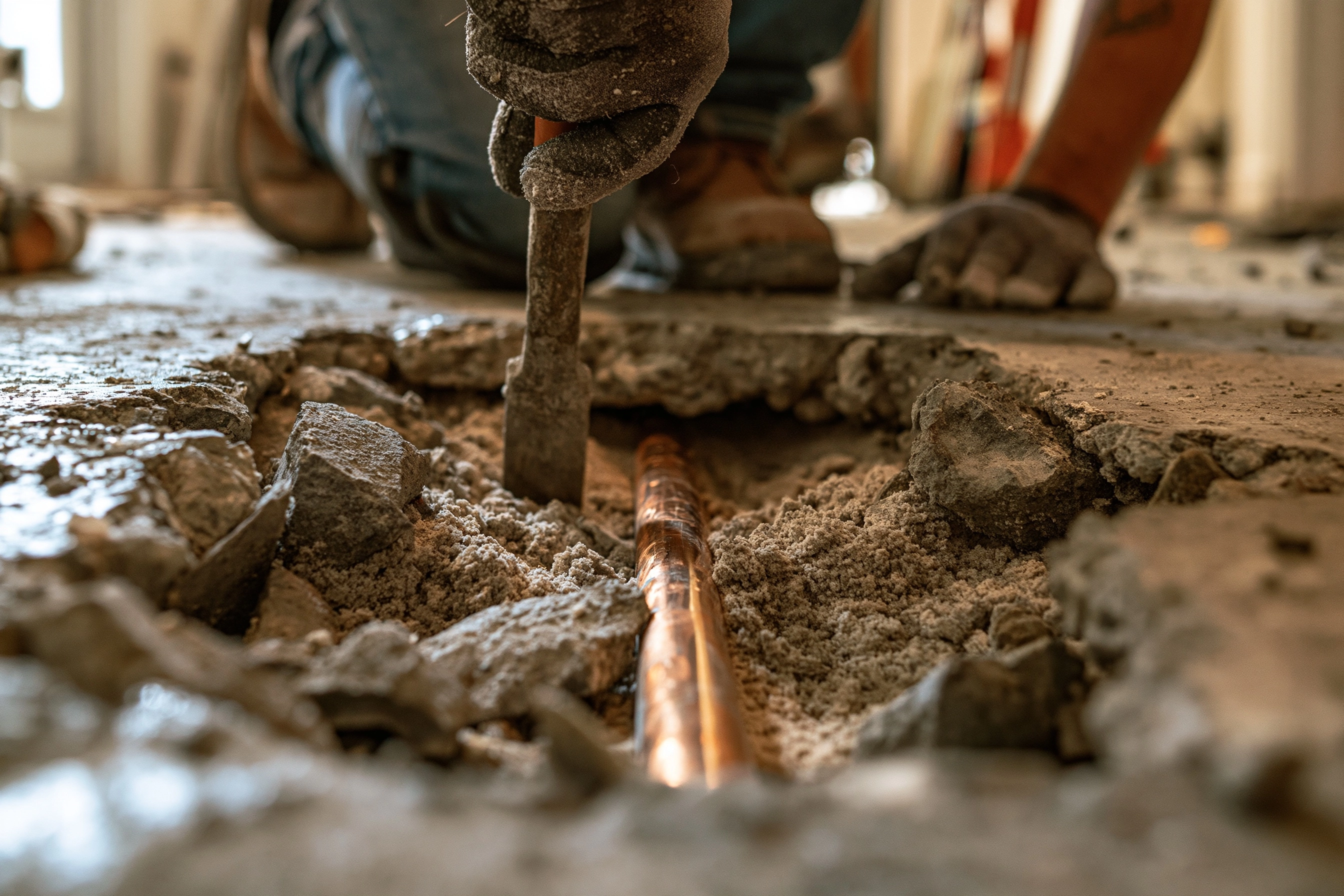
A leak in a pipe under a concrete floor means breaking into the slab to reach it. The plumber locates the line first so the opening is as small as the repair allows.
The water line that runs to the house from the street can leak where it is buried. The plumber finds the damaged section and repairs or replaces it.
Under the state construction code, a leak repair that replaces a length of pipe counts as ordinary maintenance. No permit, inspection or notice to the building office is required for that work.
If the same line leaks more than once, repiping is the page to read. In a wet emergency, the emergency plumbing page lists what the plumber looks at, and the homepage shows all seven services.
Call us to discuss your current issue and how we can assist you. The call is free and you get a free, personalized estimate with no obligation. We're here to help.
Call (855) 321-3426